Aloe vera has been used in traditional beauty routines for generations, especially for caring for the scalp, skin, and hair. The clear gel found inside the aloe vera leaf contains water and various naturally occurring compounds, making it a popular ingredient in homemade hair treatments.
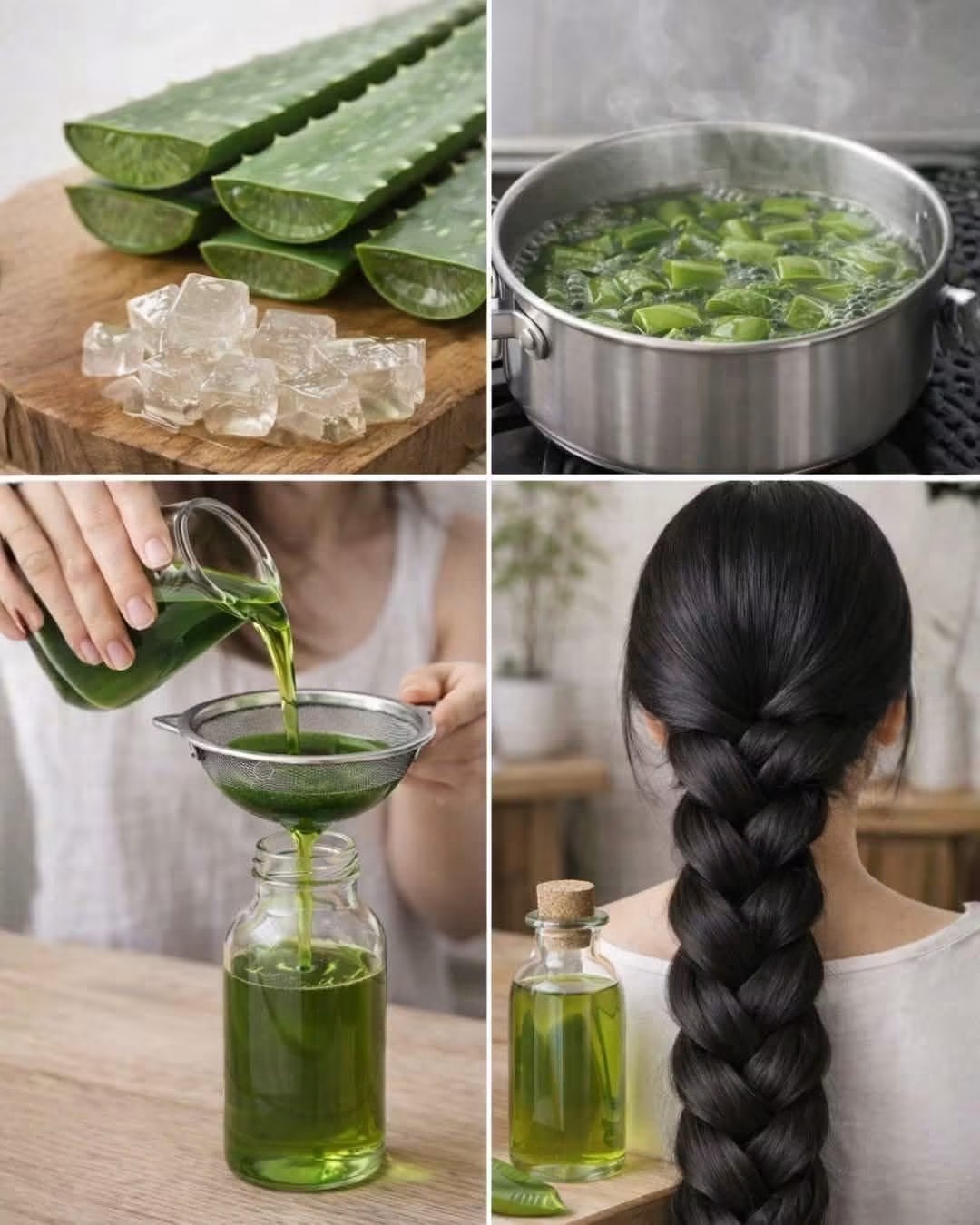
The image suggests boiling aloe vera pieces and preparing a green liquid or oil for hair care. While aloe vera can be useful as a soothing hair and scalp ingredient, some online claims about it making hair grow extremely fast or preventing every type of hair problem are exaggerated. A simple aloe vera preparation can support a healthy hair-care routine, but it is not a guaranteed treatment for hair loss.
What Makes Aloe Vera Interesting for Hair
Aloe vera leaves contain a clear inner gel surrounded by a yellowish latex layer. The gel is the part most commonly used in cosmetic preparations.
Aloe vera gel is largely water and also contains various plant compounds. When applied to the scalp, its moisturizing and soothing properties may make the hair feel softer and the scalp more comfortable.
For people who experience dryness from frequent washing, styling, or exposure to environmental conditions, a gentle aloe-based treatment can be an appealing addition to a basic hair-care routine.
Aloe Vera May Help Moisturize the Hair
Dry hair can look dull, rough, and difficult to manage. Moisture is important for maintaining the appearance and flexibility of the hair shaft.
Aloe vera gel has a high water content, so it can provide a lightweight moisturizing feel when used appropriately. It can be particularly appealing for people who prefer simple plant-based ingredients rather than heavily fragranced styling products.
However, aloe vera is not a substitute for a proper conditioner. If your hair is very dry or damaged, a conditioner formulated for your hair type may provide more consistent results.
Aloe Vera and the Scalp
A healthy scalp is an important part of maintaining healthy-looking hair.
Aloe vera is often used topically because it can provide a cooling and soothing sensation. This may make it useful in a personal-care routine when the scalp feels dry or irritated.
However, persistent itching, redness, scaling, painful areas, or significant flaking should not automatically be attributed to simple dryness. Conditions such as dandruff, dermatitis, psoriasis, or fungal infections may require specific treatment.
Aloe vera should therefore be viewed as a cosmetic or soothing ingredient rather than a universal scalp medicine.
Can Aloe Vera Make Hair Grow Faster
One of the most common claims associated with aloe vera is that it dramatically accelerates hair growth.
There is not enough high-quality human evidence to conclude that homemade aloe vera preparations significantly increase hair growth in everyone.
Hair growth depends on many factors, including genetics, age, hormones, nutrition, health, medications, and the condition of the scalp. Applying aloe vera to the scalp cannot overcome every cause of hair loss.
That said, taking care of the scalp and reducing unnecessary hair damage can help maintain healthier-looking hair.
Aloe Vera May Help Reduce the Feeling of Dryness
Aloe vera can be incorporated into a moisturizing routine for both the scalp and hair lengths.
When hair becomes excessively dry, it can become more prone to breakage. Keeping the hair conditioned, avoiding excessive heat, and handling wet hair gently are generally more important than relying on a single ingredient.
Aloe vera can complement these habits, especially when used as part of a broader hair-care routine.
How to Prepare Aloe Vera for Hair Care
If you are preparing aloe vera at home, hygiene is important.
Start with a fresh aloe vera leaf and wash the outside thoroughly. Cut away the base and allow the yellow latex to drain before using the clear inner gel. The yellow latex contains compounds that can irritate the skin and should not be confused with the clear gel.
Remove the clear gel from the leaf and rinse it thoroughly.
The image shows aloe vera being boiled. However, boiling the entire leaf is not necessary to obtain the benefits associated with the inner gel. Heating can also change some of the compounds present in the fresh gel.
For a simple hair treatment, many people prefer using properly cleaned fresh gel directly or blending it into a smooth preparation.
How to Use Aloe Vera on the Hair
Apply a small amount of clean aloe vera gel to the scalp or hair lengths. Massage gently with your fingertips rather than scratching the scalp.
Leave it on for a short period if your skin tolerates it, then rinse thoroughly and wash the hair if necessary.
Because homemade aloe vera preparations do not contain the preservatives found in commercial products, they should not be stored for long periods at room temperature.
A freshly prepared mixture should be handled carefully and discarded if it develops an unusual smell, color, or appearance.
Aloe Vera and Hair Oil Are Not the Same Thing
The image shows a green liquid being poured into a bottle and presents it as an oil. It is important to distinguish aloe vera gel or aloe-infused liquid from actual hair oil.
Aloe vera gel is water-based, whereas oils are fat-based substances. If aloe vera gel is mixed with an oil, the resulting preparation may contain both water and oil and can spoil more easily unless it is formulated correctly.
Commercial aloe vera hair products often contain preservatives and stabilizers to improve their shelf life. Homemade mixtures generally do not have the same protection against microbial growth.
For this reason, homemade aloe vera preparations are best made in small quantities and used promptly.
Aloe Vera for Shiny Looking Hair
Aloe vera can make hair feel smoother and more hydrated, which may improve its appearance.
When hair is properly conditioned, the strands can appear shinier because the surface reflects light more evenly. However, this effect should not be confused with permanent changes to hair structure.
If your goal is shinier hair, regular conditioning, gentle washing, limiting excessive heat, and protecting the hair from unnecessary mechanical damage can be more reliable than using one homemade treatment.
Can Aloe Vera Help With Dandruff
Aloe vera is sometimes promoted as a natural dandruff treatment because of its soothing properties.
There is some scientific interest in aloe vera and skin conditions, but evidence is not strong enough to say that aloe vera alone reliably eliminates dandruff.
Dandruff can have several contributing factors, including the yeast Malassezia and inflammation of the scalp. Medicated shampoos containing recognized antifungal ingredients are generally more appropriate when dandruff is persistent or severe.
Aloe vera may be used as a supplementary cosmetic ingredient if it does not irritate your scalp.
Important Safety Tips
Natural ingredients can still cause allergic or irritating reactions.
Before applying fresh aloe vera over a large area, test a small amount on a limited area of skin. Stop using it if you develop burning, redness, swelling, itching, or a rash.
Do not apply aloe preparations to open wounds or severely irritated skin unless advised by a healthcare professional.
It is also important to remove the yellow latex from the leaf before preparing the clear gel for cosmetic use.
The Bottom Line
Aloe vera can be a useful ingredient in a simple hair-care routine. Its gel provides moisture and may have soothing properties that make it appealing for dry hair or scalp care.
However, claims that boiling aloe vera and turning it into a homemade oil will guarantee rapid hair growth, permanently stop hair loss, or cure every scalp condition are not supported by strong evidence.
For the best results, think of aloe vera as one optional part of a healthy hair-care routine, alongside gentle washing, conditioning, adequate nutrition, and protection from excessive heat and chemical damage.
If hair loss is sudden, severe, patchy, or continuing despite normal hair care, the underlying cause is more important than any homemade treatment and should be assessed by a healthcare professional.