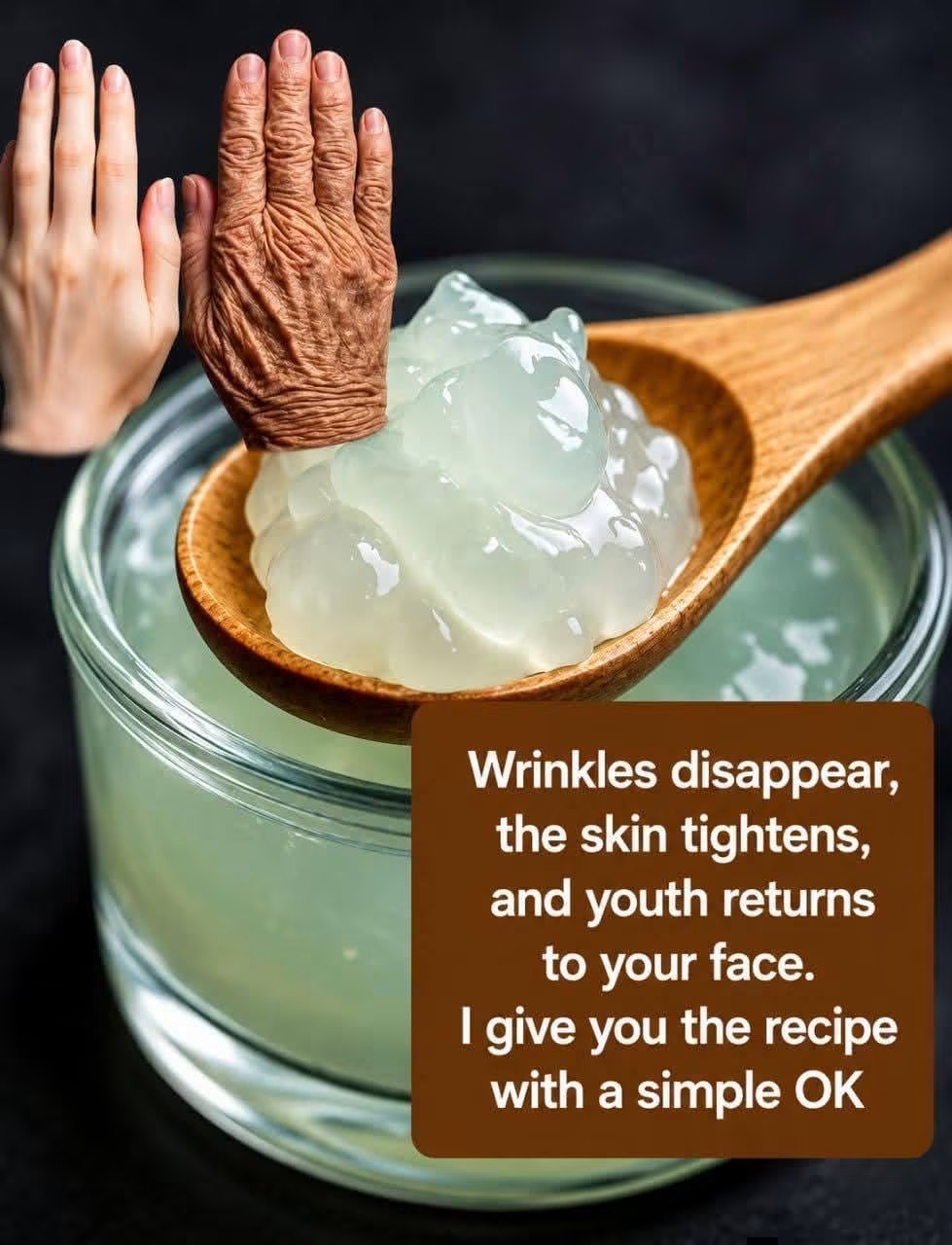
Aloe vera has been used in traditional skin-care routines for generations. The clear gel found inside the aloe vera leaf is especially popular because it feels cooling, lightweight, and soothing when applied to the skin. Today, aloe vera can be found in moisturizers, lotions, facial gels, after-sun products, and many homemade beauty treatments.
A viral image claims that aloe vera can make wrinkles disappear, tighten the skin, and bring youth back to the face. While this wording is exaggerated, aloe vera can still have useful properties for maintaining hydrated and healthy-looking skin. Understanding what it can and cannot do is important before using it as a homemade facial treatment.
What Is Aloe Vera Gel
Aloe vera is a succulent plant with thick, fleshy leaves. Inside the leaves is a transparent gel containing mostly water along with various naturally occurring plant compounds.
The gel is commonly used in cosmetic products because of its moisturizing and soothing qualities. It can provide a refreshing sensation and may help reduce the feeling of dryness on the skin.
The clear inner gel should be distinguished from the yellow latex found closer to the outer portion of the leaf. These are not the same material, and the yellow latex can be irritating.
Can Aloe Vera Remove Wrinkles
Aloe vera cannot literally erase wrinkles or permanently reverse the aging process.
Wrinkles develop as the skin changes with age. Collagen and elastin production gradually changes, skin becomes less elastic, and repeated facial movements and environmental exposure contribute to visible lines.
Aloe vera may temporarily make dry skin appear smoother because hydrated skin often looks softer and more supple. This can make some fine lines appear less noticeable, particularly when dryness is contributing to their appearance.
That is different from permanently removing wrinkles.
For meaningful protection against premature skin aging, daily sun protection is much more important than relying on a homemade aloe vera treatment.
Aloe Vera Can Help Hydrate the Skin
One of the main reasons aloe vera is popular in beauty routines is its high water content.
Dry skin can feel tight, rough, or uncomfortable. Applying a suitable aloe-based moisturizer may help improve the skin’s feeling of hydration.
However, hydration alone does not mean that aloe vera can restore lost collagen or reverse established wrinkles. For best results, aloe can be used as one component of a broader skin-care routine.
Aloe Vera and Skin Soothing
Aloe vera is often used after exposure to environmental conditions that leave the skin feeling uncomfortable. Its cooling texture can make it pleasant to apply when the skin feels dry or warm.
Some people also use aloe-based products after spending time outdoors.
If the skin is significantly burned, blistered, swollen, or painful, however, a homemade remedy should not replace appropriate medical care.
Aloe Vera and Skin Elasticity
The claim that aloe vera “tightens” the skin is another popular beauty statement.
Aloe gel can temporarily create a smoother feeling as it dries on the surface of the skin. Hydration can also make the skin appear more plump. These effects may create the impression of firmer skin.
But this should not be confused with permanently tightening loose skin.
Significant skin laxity is influenced by age, genetics, sun exposure, and changes in collagen and elastin. A simple homemade aloe preparation cannot reverse these structural changes.
How to Prepare Fresh Aloe Vera Gel
If you want to use fresh aloe vera cosmetically, begin with a clean, healthy leaf.
Wash the outside of the leaf carefully. Cut away the base and allow the yellow liquid near the outer portion of the leaf to drain. Then remove the outer green skin and collect only the clear inner gel.
Rinse the gel thoroughly before use.
It is important to remember that fresh homemade aloe preparations do not contain the preservatives used in many commercial cosmetic products. Because of this, contamination and spoilage are possible.
For that reason, homemade preparations should be made in small quantities, kept refrigerated when appropriate, and discarded if they develop an unusual smell, color, or appearance.
A Simple Aloe Vera Facial Routine
A straightforward routine does not need many ingredients.
Start by washing your face gently with a mild cleanser. Pat the skin dry rather than rubbing it aggressively.
Apply a small amount of clean aloe vera gel to a limited area first. If your skin tolerates it, a thin layer can be applied to the face.
Allow the product to sit comfortably on the skin and rinse if it feels sticky or irritating. Follow with a suitable moisturizer.
During the daytime, finish with a broad-spectrum sunscreen. Sun protection is one of the most important steps for reducing additional photoaging.
Always Perform a Patch Test
Natural ingredients can still cause irritation or allergic reactions.
Before applying fresh aloe vera to your entire face, test a small amount on a limited area of skin. Wait to see how your skin responds.
If you experience burning, itching, redness, swelling, or a rash, wash the area and stop using the product.
People with particularly sensitive skin should be cautious with homemade preparations because their composition and concentration can vary.
Aloe Vera Is Not a Replacement for Anti-Aging Treatments
If your main concern is wrinkles, aloe vera can be considered a moisturizing or soothing ingredient, but it should not be viewed as a complete anti-aging treatment.
A consistent skin-care routine generally matters more than one homemade ingredient. Gentle cleansing, regular moisturizing, sun protection, adequate sleep, not smoking, and a balanced diet all contribute to healthier-looking skin.
Evidence-based cosmetic and dermatological treatments may also be available for people who want to address specific signs of aging.
Protect Your Skin From the Sun
Sun exposure is one of the major environmental contributors to premature skin aging.
Ultraviolet radiation can contribute to changes in skin texture, pigmentation, and collagen. This is why using sunscreen consistently is much more meaningful for long-term skin protection than relying solely on aloe vera.
Aloe gel may make the skin feel refreshed, but it does not replace sunscreen.
When spending time outdoors, use appropriate sun protection and reapply sunscreen as directed on the product.
Can Aloe Vera Make You Look Younger
Aloe vera cannot restore youth to the face in the literal sense.
Nevertheless, hydrated skin can look smoother, fresher, and more comfortable. If someone has dry skin, using a suitable aloe-based product may improve the skin’s appearance temporarily.
This may explain why aloe vera is sometimes described online as a natural “anti-aging” ingredient.
The realistic expectation is improved hydration and a smoother appearance, rather than the disappearance of wrinkles.
The Bottom Line
Aloe vera is a popular natural ingredient that can provide a soothing and hydrating sensation when used appropriately. It may help dry skin feel more comfortable and can temporarily make the skin appear smoother.
However, claims that aloe vera makes wrinkles disappear, permanently tightens loose skin, or restores youth are overstated. Aging is a natural biological process, and no simple homemade recipe can completely reverse it.
For healthier-looking skin, consider aloe vera as an optional addition to a broader routine that includes gentle cleansing, moisturizing, and especially daily sun protection. If you have persistent irritation, unexplained skin changes, or a significant skin condition, it is better to seek advice from a qualified healthcare professional rather than relying entirely on homemade remedies.