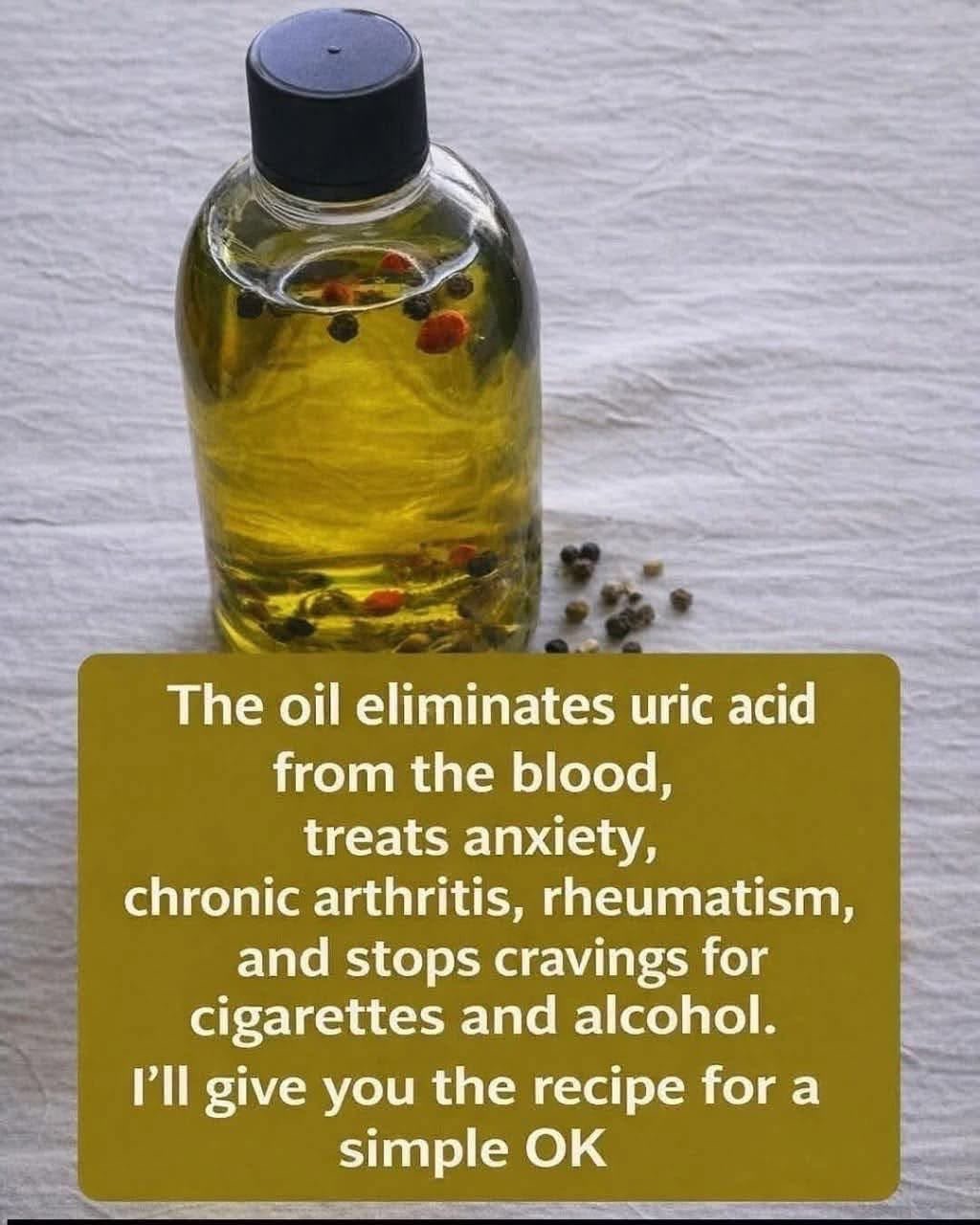
Herbal infused oils have been used in traditional wellness practices for generations. They are made by combining a carrier oil with herbs, spices, or other plant ingredients and allowing their flavors and natural compounds to infuse into the oil. The image shows a bottle of golden-colored oil containing small herbs and spices, along with claims that the oil can eliminate uric acid from the blood, treat anxiety, chronic arthritis, and rheumatism, and stop cravings for cigarettes and alcohol.
These claims should be approached carefully. A homemade infused oil may be an interesting traditional preparation, but there is no reliable basis for claiming that an oil can remove uric acid from the blood or cure arthritis, anxiety, addiction, or other medical conditions. Serious health concerns require appropriate medical evaluation and treatment.
Still, an infused oil can have a place in everyday cooking and wellness routines when prepared and used safely.
What Is an Infused Oil
An infused oil is a carrier oil that has been combined with herbs, spices, or other plant materials. Common carrier oils include olive oil, sunflower oil, and other edible vegetable oils.
During infusion, compounds responsible for the aroma, flavor, and color of the plant ingredients can move into the oil. The final product may have a stronger flavor than the original oil.
Infused oils can be used in cooking, salad dressings, marinades, or small amounts as part of a meal, depending on the ingredients and preparation method.
It is important to distinguish edible infused oils from essential oils. Essential oils are highly concentrated and are not automatically safe to consume.
Understanding the Uric Acid Claim
One of the strongest statements in the image is that the oil “eliminates uric acid from the blood.”
This is not an appropriate claim for a homemade herbal oil.
Uric acid is a normal waste product produced when the body breaks down purines. Most uric acid is removed from the body through the kidneys. When uric acid levels become too high, crystals can form in joints and contribute to gout.
Managing elevated uric acid depends on the underlying cause and may involve dietary changes, weight management when appropriate, hydration, and medications prescribed by a healthcare professional.
A homemade infused oil should not be used as a replacement for medical treatment of gout or high uric acid.
What About Arthritis and Rheumatism
Arthritis is not a single disease. It describes a group of conditions that can cause joint pain, stiffness, swelling, and reduced mobility.
Because different types of arthritis have different causes and treatments, it is misleading to suggest that one herbal oil can treat all forms of arthritis or rheumatism.
Some herbs and spices contain compounds that have been investigated for their potential anti-inflammatory properties. However, laboratory findings or studies of individual plant extracts do not prove that a homemade infused oil can treat chronic joint disease.
If joint pain continues, becomes severe, or is accompanied by swelling or other symptoms, proper evaluation is important.
Can an Oil Treat Anxiety
Anxiety can affect thoughts, emotions, sleep, concentration, and everyday activities. Its causes and severity vary considerably from person to person.
The aroma of certain herbs or spices may be pleasant and relaxing, and some people enjoy incorporating scented or flavorful ingredients into calming routines. That is very different from treating an anxiety disorder.
A homemade infused oil should not be presented as a treatment for anxiety. People experiencing persistent or severe anxiety should speak with an appropriate healthcare professional.
Relaxation practices, regular physical activity, adequate sleep, social support, and professional care can all play useful roles depending on the individual situation.
Claims About Cigarette and Alcohol Cravings
The image also claims that the oil can stop cravings for cigarettes and alcohol.
This is another claim that should not be treated as established fact.
Nicotine and alcohol dependence can involve powerful physical and psychological processes. Successfully reducing or stopping use often requires a combination of behavioral strategies, support, and sometimes medication.
A homemade oil cannot be relied upon to eliminate cravings or treat dependence.
If someone wants to stop smoking or reduce alcohol use, evidence-based support can make the process safer and more effective than relying on an unverified home remedy.
Why Herbal Oils Are Still Popular
Despite the exaggerated claims sometimes found online, infused oils remain popular for practical reasons.
They can add flavor to food and make simple meals more interesting. Garlic, rosemary, thyme, chili, black pepper, and other herbs and spices are commonly used to create flavorful oils.
Using herbs and spices in cooking can also help people create flavorful meals without depending heavily on added salt or highly processed sauces.
The value of an infused oil does not depend on calling it a cure. It can simply be an enjoyable culinary preparation.
A Simple Culinary Infused Oil
If you want to prepare an infused oil for food, keep the recipe simple and prioritize food safety.
Ingredients
- 1 cup of a suitable edible oil
- Dried culinary herbs or spices of your choice
- A clean, dry glass container
Preparation
Choose ingredients that are completely dry. Add a small amount of dried herbs or spices to a clean container and pour the oil over them.
Seal the container and allow the flavors to infuse according to the ingredients being used. For a safer homemade product, dried ingredients are generally preferable to fresh ingredients because fresh plant material can introduce moisture.
Strain the oil if desired and store it appropriately. If there are any signs of spoilage, such as an unusual smell, cloudiness, mold, or other unexpected changes, discard it.
Homemade oils containing fresh garlic or fresh herbs require particular care because improperly prepared and stored products can create conditions favorable to dangerous bacterial growth. Following tested food-preservation guidance is safer than relying on a social-media recipe.
How to Use Infused Oil
A properly prepared culinary infused oil can be used in many everyday dishes.
Drizzle a small amount over roasted vegetables, use it as part of a salad dressing, or add it to cooked grains and other savory foods. It can also provide flavor to soups, beans, and simple vegetable dishes.
Because oil is calorie-dense, a moderate portion is usually sufficient.
The purpose should be flavor and enjoyment rather than trying to consume large quantities for supposed medicinal effects.
Choosing Ingredients Wisely
The exact ingredients shown in the image are not clearly identified as a complete recipe. For that reason, it is better not to assume that every herb or spice visible in the bottle is safe for internal use.
Some plant ingredients are intended for culinary use, while others may be unsuitable for consumption or may interact with medications.
If you are preparing an infused oil for food, use clearly identified culinary herbs and spices from a reliable source. Avoid unidentified plants or concentrated extracts.
Possible Benefits of a Balanced Diet
Herbs and spices can contribute flavor and variety to a balanced diet. Many contain naturally occurring plant compounds, and using them in meals can make healthy foods more enjoyable.
For example, flavorful oils can be paired with vegetables, legumes, whole grains, fish, or other nutritious foods.
This broader dietary pattern matters much more than any single ingredient.
Instead of focusing on a “miracle oil,” consider how the oil fits into the overall meal. An herb-infused dressing over a large serving of vegetables is a different nutritional choice from using a large amount of oil alongside highly processed foods.
When to Seek Medical Advice
Do not rely on an infused oil if you have symptoms that could indicate gout, arthritis, or another medical condition.
Sudden severe joint pain, significant swelling, unexplained persistent pain, difficulty moving a joint, or recurring symptoms deserve professional attention.
Likewise, persistent anxiety, difficulty controlling alcohol use, or difficulty stopping smoking are reasons to seek appropriate support rather than relying on an unverified remedy.
Natural products can sometimes interact with prescription medications, so anyone taking regular medication should check with a qualified healthcare professional before consuming concentrated herbal preparations.
The Bottom Line
Herbal infused oils can be flavorful and enjoyable additions to cooking, but they should not be presented as miracle treatments.
The claim that a particular oil can eliminate uric acid from the blood, cure chronic arthritis or rheumatism, treat anxiety, or stop cigarette and alcohol cravings is not supported simply because herbs or spices are present in the bottle.
For people concerned about uric acid, gout, joint pain, anxiety, smoking, or alcohol use, evidence-based medical and behavioral approaches are much more reliable.
If you enjoy infused oils, use them primarily for flavor. Choose clearly identified culinary ingredients, prepare and store them safely, and consume reasonable portions.
The healthiest approach is not to search for one ingredient that supposedly fixes every problem. Instead, build a routine around nutritious food, regular movement, adequate sleep, hydration, and appropriate medical care when needed. Herbal ingredients can complement that lifestyle, but they should not replace proven treatment.