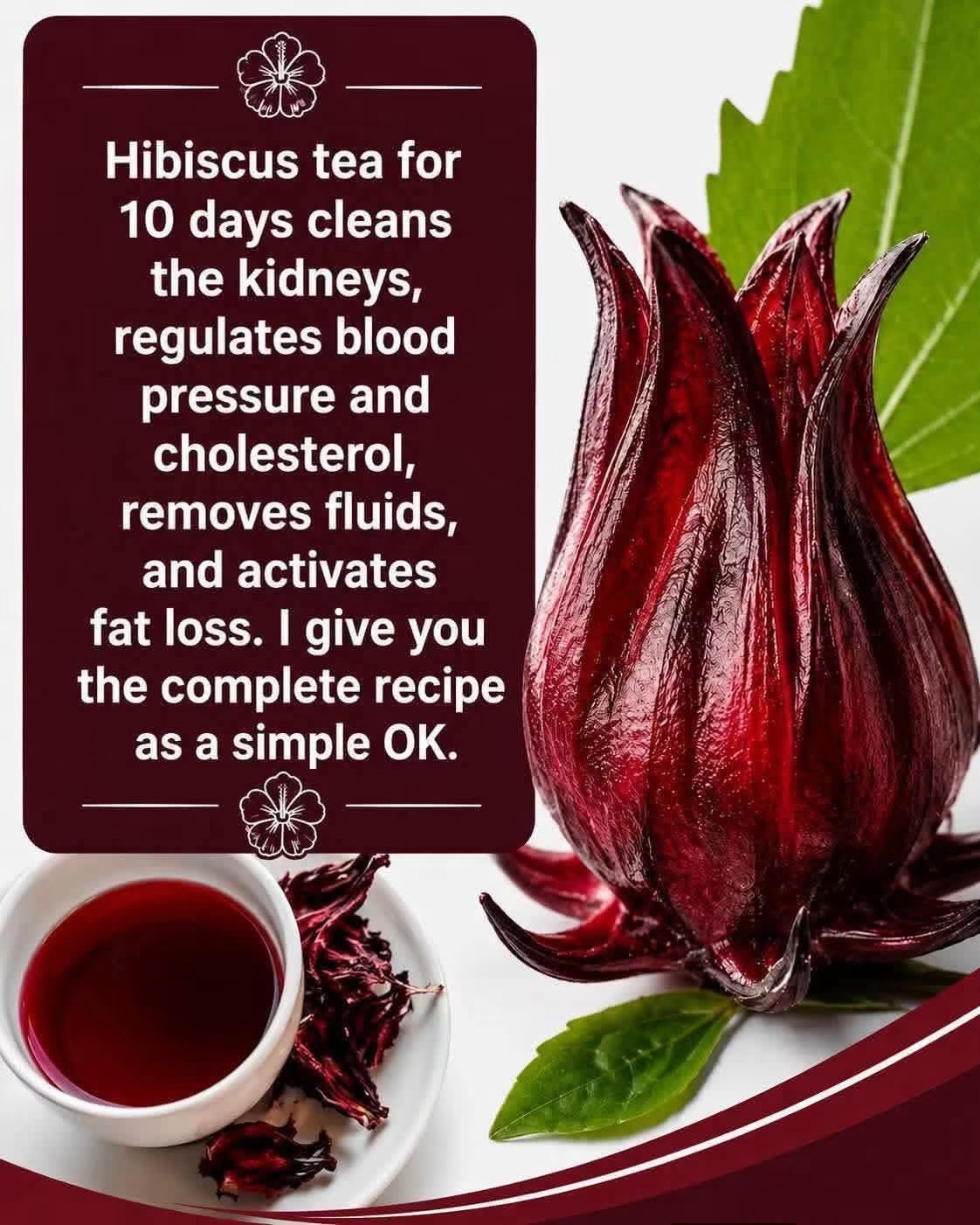
Hibiscus tea is a vibrant red herbal drink made from dried hibiscus flowers. It has a naturally tart, fruity flavor and can be enjoyed hot or cold. Because of its deep ruby color and refreshing taste, hibiscus tea has become a popular choice for people looking for a simple homemade beverage.
The image highlights several traditional wellness claims about hibiscus tea, including supporting healthy blood pressure and helping with fluid balance. However, hibiscus tea should not be described as a guaranteed “kidney cleanse,” a fat-burning treatment, or a replacement for medical care. Research on hibiscus and blood pressure is promising, but its effects can vary from person to person.
The good news is that you do not need to make exaggerated health claims to enjoy this beautiful drink. A simple hibiscus infusion is easy to prepare, naturally caffeine-free, and can be served warm or chilled.
What Is Hibiscus Tea?
Hibiscus tea is an herbal infusion prepared from dried hibiscus calyces, commonly from Hibiscus sabdariffa. The dried flowers produce a deep red liquid with a pleasantly sour flavor that can remind some people of cranberries.
Unlike traditional black or green tea, hibiscus tea is naturally caffeine-free. This makes it a convenient option at different times of the day.
The flavor can be enjoyed on its own, but many people add lemon, ginger, cinnamon, mint, or a small amount of honey to balance its natural tartness.
Ingredients You Need
You only need a few ingredients to prepare a basic hibiscus tea.
- 2 tablespoons dried hibiscus flowers
- 1 liter water
- 1 to 2 tablespoons honey or sugar, optional
- 1 tablespoon fresh lemon juice, optional
- Fresh mint leaves, optional
- Ice cubes, if serving cold
You can adjust the quantity of hibiscus according to how strong you want the tea to taste. Using more flowers creates a darker and more concentrated infusion, while using less produces a lighter drink.
How to Make Hibiscus Tea
Start by bringing the water to a boil in a saucepan or kettle.
Once the water is hot, add the dried hibiscus flowers. Reduce the heat and allow the flowers to steep gently for approximately 5 to 10 minutes.
The longer the flowers steep, the stronger and more intense the color and flavor will become.
After steeping, remove the saucepan from the heat and allow the tea to cool slightly.
Pour the tea through a fine strainer into a clean jug or heatproof container. This removes the dried flowers and leaves a smooth, ruby-red drink.
If you want to sweeten the tea, add honey or sugar while the liquid is still warm. Stir until completely dissolved.
For extra freshness, add a little lemon juice.
How to Make Iced Hibiscus Tea
Hibiscus tea is particularly refreshing when served cold.
Prepare the tea using the method above and allow it to cool to room temperature. Transfer it to the refrigerator and chill for at least one hour.
When ready to serve, fill a glass with ice and pour the chilled hibiscus tea over it.
Add a lemon slice, a few fresh mint leaves, or a small piece of fresh ginger for an attractive finish.
If you are serving guests, prepare a large pitcher and add lemon slices and mint just before serving.
How to Adjust the Flavor
Hibiscus has a naturally tart taste, so some people prefer to add a little sweetness.
Start with a small amount of honey or sugar and taste the drink before adding more. This allows you to control the sweetness without making the beverage overly sugary.
If you prefer a more citrusy flavor, add fresh lemon or orange juice.
For a warming variation, steep the hibiscus with a small piece of cinnamon or fresh ginger.
You can also combine hibiscus with other caffeine-free herbs, such as mint, depending on your preferred flavor.
Hibiscus Tea and Hydration
One of the simplest benefits of drinking hibiscus tea is that it can contribute to your overall fluid intake.
When prepared mainly with water and without excessive sugar, it can be an enjoyable alternative to sweetened soft drinks.
However, drinking hibiscus tea does not “flush toxins” from the kidneys in a special 10-day cleansing process. Your kidneys already perform important filtration and fluid-balance functions continuously.
If you have concerns about kidney health, it is better to speak with a qualified healthcare professional rather than relying on a tea cleanse.
Hibiscus Tea and Blood Pressure
Hibiscus has been studied for its potential effect on blood pressure. Some research suggests that drinking hibiscus preparations may modestly reduce blood pressure in certain people, particularly those with elevated blood pressure.
However, this does not mean hibiscus tea is a treatment for hypertension.
People who take medication for high blood pressure should be especially careful because combining hibiscus with blood-pressure-lowering medication could potentially lower blood pressure too much.
If you take regular medication or have a medical condition, discuss herbal drinks and supplements with your healthcare professional before consuming them regularly for therapeutic purposes.
Does Hibiscus Tea Burn Fat?
Hibiscus tea is sometimes promoted online as a fat-burning or weight-loss drink.
It is important to be realistic about this claim. Hibiscus tea is not a magic fat burner, and drinking it alone does not cause significant body-fat loss.
It can still be a useful beverage for people trying to reduce their intake of sugary drinks. Unsweetened hibiscus tea contains very few calories, so replacing high-calorie beverages with it may support an overall healthy eating pattern.
Sustainable weight management depends on overall dietary habits, physical activity, sleep, and other lifestyle factors rather than one particular tea.
Can You Drink Hibiscus Tea Every Day?
For many healthy adults, hibiscus tea can be enjoyed as part of a normal diet.
There is no need to follow a strict “10-day cleanse” to enjoy it. You can drink it occasionally or include it as one of several beverages in your routine.
The amount and frequency that are appropriate can depend on your individual health circumstances, medications, and diet.
Pregnant or breastfeeding people, people taking regular medication, and anyone with a medical condition should seek professional advice before using hibiscus preparations regularly for health purposes.
Best Time to Drink Hibiscus Tea
There is no universally established “best time” to drink hibiscus tea.
It can be served in the morning, during the afternoon, or with an evening meal. Because it is naturally caffeine-free, it does not provide the stimulating effect associated with caffeinated teas.
If you prepare it as an iced beverage, it can also make a refreshing alternative to sugary drinks during warm weather.
How to Store Homemade Hibiscus Tea
If you prepare more tea than you need, allow it to cool before transferring it to a clean, covered container.
Store it in the refrigerator and consume it within a few days for the best flavor and freshness.
If you notice an unusual smell, appearance, or taste, discard the remaining tea.
For convenience, you can prepare a batch in advance and keep it chilled so that a refreshing glass is ready whenever you want one.
Simple Hibiscus Tea Variations
Hibiscus and Lemon Tea
Add fresh lemon juice to chilled hibiscus tea for a bright, citrusy flavor.
Hibiscus and Ginger Tea
Steep a few thin slices of fresh ginger with the hibiscus flowers. Ginger adds warmth and a slightly spicy flavor.
Hibiscus Mint Tea
Add fresh mint leaves after the tea has cooled. This combination is particularly refreshing over ice.
Hibiscus Orange Tea
Mix chilled hibiscus tea with a small amount of fresh orange juice. The sweetness of orange balances the tartness of hibiscus.
Tips for Better Hibiscus Tea
Use good-quality dried hibiscus flowers for the best flavor and color.
Avoid steeping the flowers for too long if you find the tea excessively sour. A shorter steeping time creates a milder drink.
Add sweetener gradually rather than using a large amount immediately.
For iced tea, make the infusion slightly stronger because ice will dilute the flavor.
Fresh lemon, mint, ginger, or orange can add flavor without requiring much additional sugar.
Most importantly, enjoy hibiscus tea as a refreshing beverage rather than relying on it as a treatment or cleanse.
Frequently Asked Questions
Is hibiscus tea naturally caffeine-free?
Yes. Hibiscus tea made only from hibiscus flowers is naturally caffeine-free.
Does hibiscus tea cleanse the kidneys?
There is no good basis for claiming that a 10-day hibiscus tea routine “cleans” or detoxifies the kidneys. The kidneys naturally filter waste and regulate fluids. Hibiscus tea should not be used as a substitute for medical treatment.
Can hibiscus tea help with blood pressure?
Some studies suggest that hibiscus preparations may modestly lower blood pressure in certain people. However, the effect is not guaranteed, and hibiscus should not replace prescribed blood-pressure medication.
Can hibiscus tea help with weight loss?
Hibiscus tea itself is not a proven fat-burning treatment. Unsweetened tea can be a low-calorie alternative to sugary beverages, which may be helpful as part of an overall healthy lifestyle.
Can I drink hibiscus tea cold?
Yes. Hibiscus tea works very well as an iced drink. Chill it in the refrigerator and serve it over ice with lemon or mint.
Final Thoughts
Hibiscus tea is a simple, colorful, and refreshing homemade beverage that can be prepared with just dried hibiscus flowers and water. Its naturally tart flavor makes it especially enjoyable when combined with lemon, mint, ginger, or a small amount of honey.
Although hibiscus is being studied for potential effects on areas such as blood pressure, it is best to avoid exaggerated claims about kidney cleansing, rapid fat loss, or guaranteed health benefits. Think of hibiscus tea as a flavorful addition to a balanced lifestyle rather than a quick health fix.
For a simple everyday version, steep dried hibiscus flowers in hot water, strain the mixture, adjust the flavor to your preference, and enjoy it either warm or chilled.